MerchPIM is now live: AI-powered product information manager to manage, validate, and enrich Shopify product data at scale.

Etsy vs Shopify Inventory: Choosing Your Source of Truth

Stop double-selling, overselling, and chasing manual stock drift across channels. When you are managing two platforms at once, establishing a singular system of record is the only way to scale. Discover how to pick Etsy vs Shopify inventory source of truth, enforce simple operational rules, and keep your multi-channel listings accurate, automated, and error-free.

June 3, 2026

5 min read

If you sell on Etsy and Shopify, you will run into the same messy question: who is “in charge” of stock? Most inventory headaches are not about math. They are about two systems trying to lead at the same time.

When you pick one “source of truth,” you stop guessing, and you stop fixing the same problem every week. That choice saves time, money, and your reputation.

What Does “Source Of Truth” Mean?

Shopify and Etsy Inventory Source of Truth

A source of truth is the one place you trust for inventory numbers. When stock changes, that system gets updated first. Everything else follows it.

Without that decision, the stock drifts. A sale happens in one place, but the other place still shows quantity. Then you sell the same unit twice, and you spend your evening writing apology messages instead of packing.

If your business includes Shopify and Etsy, choose one simple rule and stick to it: “This platform is the boss for inventory.”

How Etsy Inventory Works (The Parts People Miss)

On Etsy, your listing quantity is the key number. If you list multiple quantities, Etsy can automatically renew the listing when part of the quantity sells, and it charges a renewal fee when it renews.

Variations add another layer. Etsy lets you update price and quantity for variations, which is useful, but it also means stock can get split across options.

That is why Etsy inventory management can feel easy for a small shop and tricky for a growing shop. The more options you have, the easier it is to miss a low-stock variation until it is already sold.

How Shopify Inventory Works (In Plain Terms)

Shopify tracks inventory by product and variant, and it can track stock by location. It also has a setting called “Continue selling when out of stock,” which lets customers buy even when inventory is zero.

That setting can help with preorders, but it can also create backorders by accident if you sell ready-to-ship items.

Many sellers feel that Etsy vs Shopify inventory source of truth is confusing at first because both platforms can show inventory, but they follow different rules.

The Two Setups That Usually Work

Choosing Etsy vs Shopify Inventory Source of Truth

Most shops end up with one of these. Pick the one that matches how you actually work, not how you wish you worked.

Etsy-First Source Of Truth

Etsy-first means you update the quantity in Etsy first, and Shopify follows Etsy.

This fits when:

The risk is simple: if you also edit stock in Shopify “just this once,” your numbers can drift fast.

Shopify-First Source Of Truth

Shopify-first means you update inventory in Shopify first, and Etsy follows Shopify.

This fits when:

A Fast Decision Test

Ask this:

“If my numbers disagree tomorrow morning, which platform would I trust first?”

If the honest answer is “Etsy,” then Etsy should lead. If the honest answer is “Shopify,” then Shopify should lead.

This simple test cuts through the noise in the Etsy vs Shopify question, because it forces you to pick a boss system.

Why Inventory Drifts Between Platforms

Inventory Management with Single Source of Truth

Even with a plan, drift can happen. The biggest causes are boring, which is good news because boring problems have boring fixes.

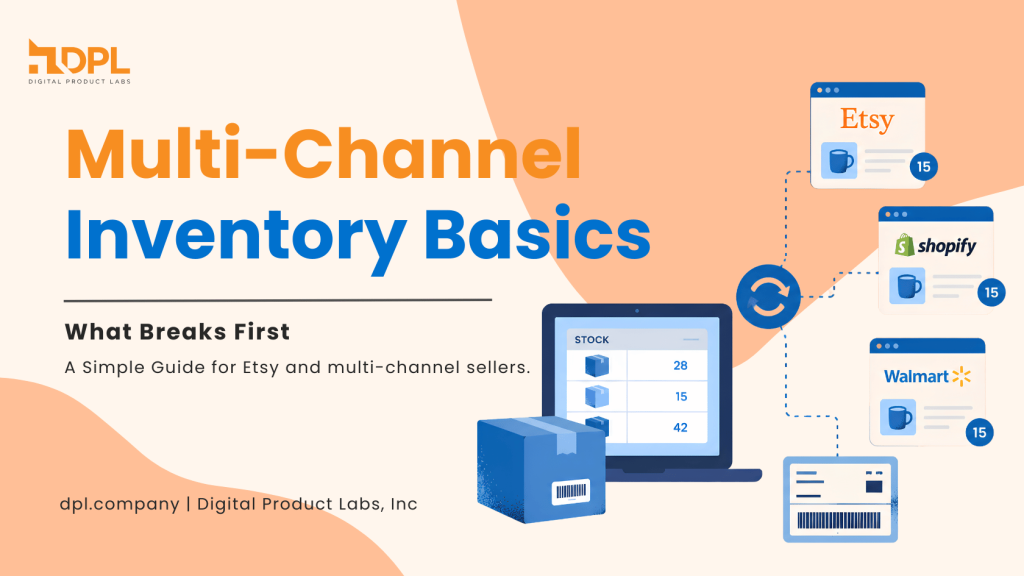
If you want a simple foundation on what breaks first in multi-channel stock, the multi-channel inventory basics will connect well once they are live.

Rules That Keep You Out Of Trouble

Etsy vs Shopify Inventory Source of Truth Checklist

You do not need complex tools to start.

Rule 1: Edit Stock In One Place Only

Pick your source of truth. Then stop editing inventory in the other system. If you have to make an emergency change, write it down and fix the source of truth the same day.

Rule 2: Treat “Continue Selling When Out Of Stock” Like A Switch

If Shopify is your source of truth, that setting can make inventory go negative. That might be fine for preorders, but it can also create accidental backorders.

Many sellers keep it off for ready-to-ship products and use a small safety buffer instead.

Rule 3: Map Variations Like A Simple Table

If “Blue / Large” in Shopify points to the wrong option in Etsy, you will get wrong orders even with correct counts.

Make a quick mapping table in a doc. It is simple, but it prevents weeks of confusion.

Rule 4: Do A Weekly Mini-Audit

Once a week, check your top 10 sellers, low-stock items, listings with many variations, and any refunds or cancellations.

Where “Shopify vs Etsy” Fits In This Decision

If you are weighing Shopify vs Etsy as platforms, think about control. Etsy is a marketplace with built-in traffic. Shopify is a store platform with more control over systems. That is why many scaling sellers choose Shopify as the inventory lead, even if Etsy remains a major channel.

If you are stuck on “Shopify or Etsy should lead,” go back to the trust test. The platform you trust first should be the boss.

FAQs On Etsy vs Shopify Inventory Source of Truth

For many shops, yes. Problems usually start when you add another channel, add complex variations, or ship at higher volume.

You can try, but it gets messy. Accuracy is easier when one platform leads, and the other follows.

Because both platforms can look like they “own” stock. Once you choose one source of truth, your workflow becomes simpler.

Pick a boss system, stop editing stock in the other platform, and do one weekly audit of top sellers and low-stock items.

Conclusion

A source of truth is not a fancy strategy. It is a simple decision that protects your time. Pick which platform leads your inventory, set clear rules, and follow them even when you are busy.

When you treat Etsy vs Shopify as an operations choice instead of a debate, your stock stays cleaner, your orders stay calmer, and your shop becomes easier to run. Many sellers keep Etsy integration for Shopify in mind today.

Related Post

Etsy Shopify Multi-Location Inventory Sync

Multi-location Inventory Sync on Etsy Integration – DPL Shopify App

Selling on both Shopify and Etsy should feel seamless, especially when you’re managing inventory across warehouses, retail stores, or fulfillment centers. But, as your business grows, keeping stock in sync across platforms can become a real headache. Overselling, stockouts, and endless manual updates are all too common. Shopify makes it easy to manage inventory across […]
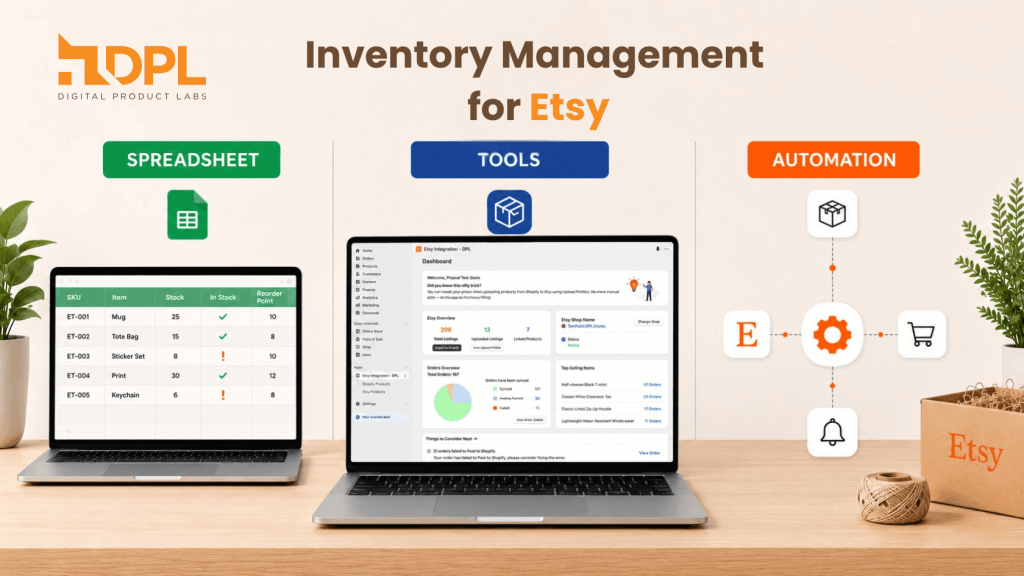
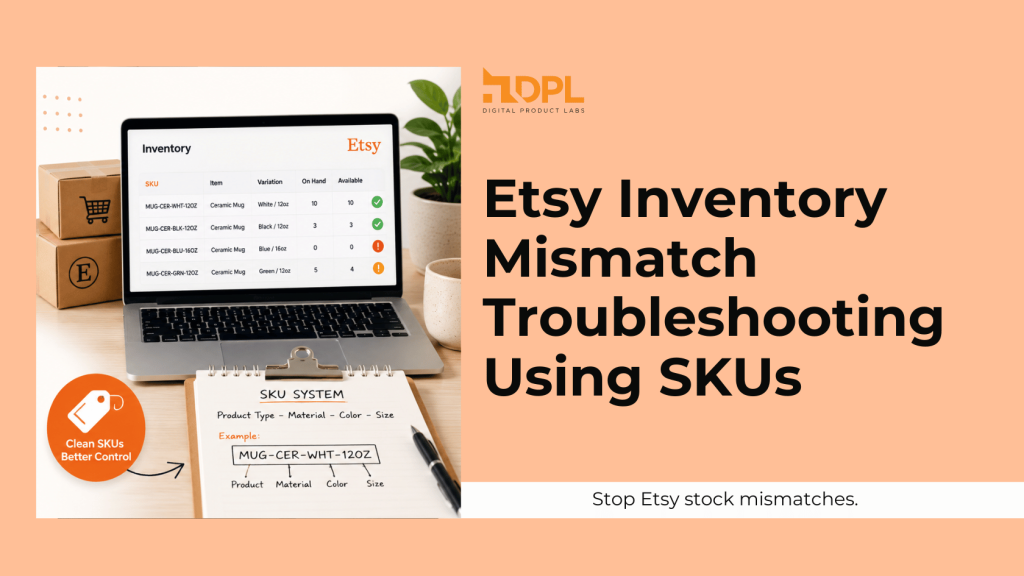
How to prevent overselling on Etsy when using Shopify - DPL

How To Prevent Overselling On Etsy When Using Shopify

How To Prevent Overselling On Etsy When Using Shopify Managing inventory across Shopify and Etsy often leads to costly overselling when stock updates lag. This multi-channel e-commerce guide breaks down why stock levels drift and offers three practical inventory workflows: the Buffer Method, Single Source of Truth, and automated sync rules to eliminate backorders and […]