MerchPIM is now live: AI-powered product information manager to manage, validate, and enrich Shopify product data at scale.

Low-Stock Rules For Etsy And Shopify That Actually Work

Synchronizing multi-channel listings requires strict operational boundaries. Implementing automated low stock rules for Etsy and Shopify establishes a singular inventory source of truth, maps shared SKU pools for bundles, and deploys safety buffers to eliminate item-out-of-stock surprises before they disrupt your storefronts.

June 4, 2026

9 min read

Nothing drains your energy like waking up to an order you cannot fulfill. One minute you are packing happily, and the next minute you are staring at the screen thinking, item out of stock… again.

Low-stock rules sound boring, but they are the difference between “busy and growing” and “busy and stressed.” When you sell on Etsy and Shopify at the same time, stock can move fast, and tiny timing gaps can turn into real problems. A simple system keeps you calm, protects your reviews, and saves you from awkward messages.

If manual stock updates are starting to feel like a part-time job, many sellers explore Etsy integration for Shopify options so inventory stays aligned across channels.

Pick One Inventory “Truth” And Stick To It

One Inventory Truth for stock management - DPL

Most stock chaos starts with one problem: two places think they are in charge.

You need one source that decides the number, and everything else follows. It can be Etsy, Shopify, or your own tracking sheet, but it must be one. If you keep switching, your shop will keep surprising you with item-out-of-stock moments.

A practical approach looks like this:

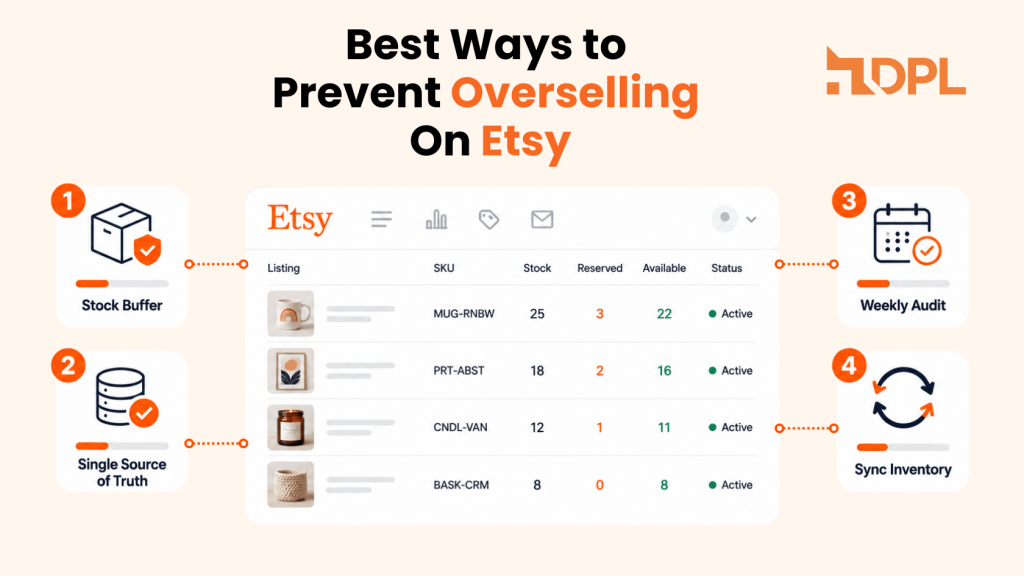
This sounds strict, but it is a relief once you do it. If you want a clean comparison of which platform should control the stock inventory source of truth: Etsy vs Shopify can help you choose based on how you actually fulfill orders.

Use A Low-Stock Buffer That Protects You From Surprise Orders

Low-Stock Buffer to stop out of stock - DPL

A buffer is like keeping an extra umbrella in your car. You hope you will not need it, but you will thank yourself when the sky turns gray.

A simple buffer rule: if you physically have 10 units, list 8. Those 2 “hidden” units protect you from:

This alone reduces item out of stock issues because you are not running inventory down to zero in public.

If you are thinking, “That sounds like I am losing sales,” it helps to remember that a canceled order is worse than a missed order. A canceled order can also lead to “product is out of stock” messages that make buyers nervous about ordering again.

When your shop grows and stock moves faster, sellers often build systems to stop overselling on Etsy when using Shopify, so buffers are not the only safety net.

Set Two Numbers For Every Product: Restock Point And Stop-Selling Point

Using Restock And Stop-Selling Point - DPL

Most sellers only track one thing: “How many do I have?” That is not enough once you scale.

You want two numbers:

Restock Point

This is when you start restocking or preparing to restock.

Example: “When this hits 6, I start making more.”

Stop-Selling Point

This is when you stop selling publicly so you do not end up with items out of stock.

Example: “When this hits 2, I stop selling until restock is confirmed.”

This works because it matches real life. Restocking takes time. Shipping takes time. Life takes time.

A helpful habit is to write your restock and stop-selling points in one place, then follow them like traffic lights. When you treat them like suggestions, you will keep hitting emergency moments.

Handle Shared SKUs, Bundles, And Multi-Packs With One Simple Rule

Shared SKUs and Bundles for Etsy and Shopify - DPL

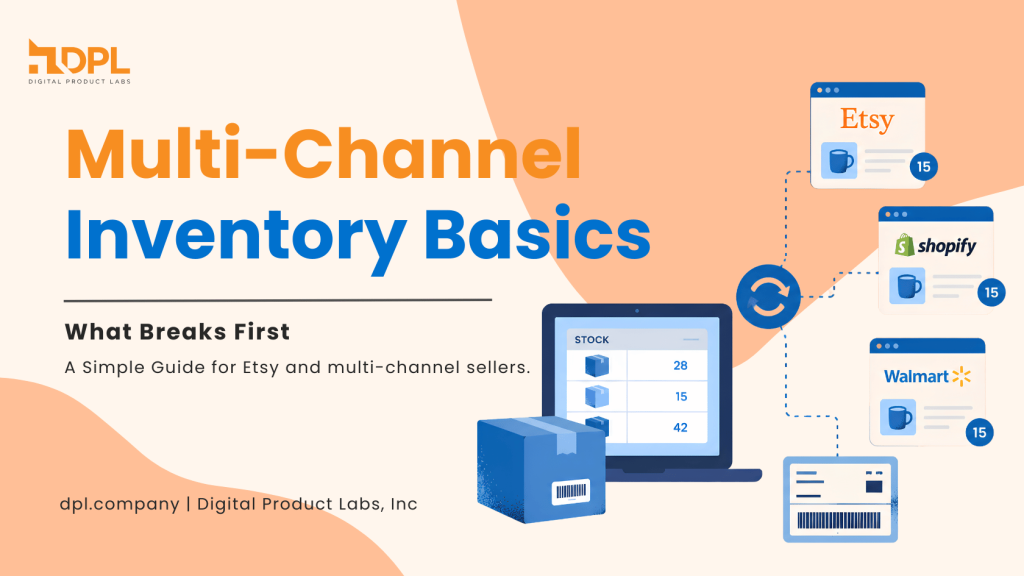
Shared inventory is where sellers get trapped. One product uses the same base stock as another product, and then orders collide.

Examples:

Here is the simple rule: always subtract from the shared pool first.

If you sell a bundle, the pool needs to drop by the bundle count. If you sell two singles, the pool drops by two. If you do not track this clearly, you will see out of stock products even though you thought you had plenty.

Use “Temporarily Out Of Stock” On Purpose, Not By Accident

Low-Stock Rules For Etsy And Shopify - DPL

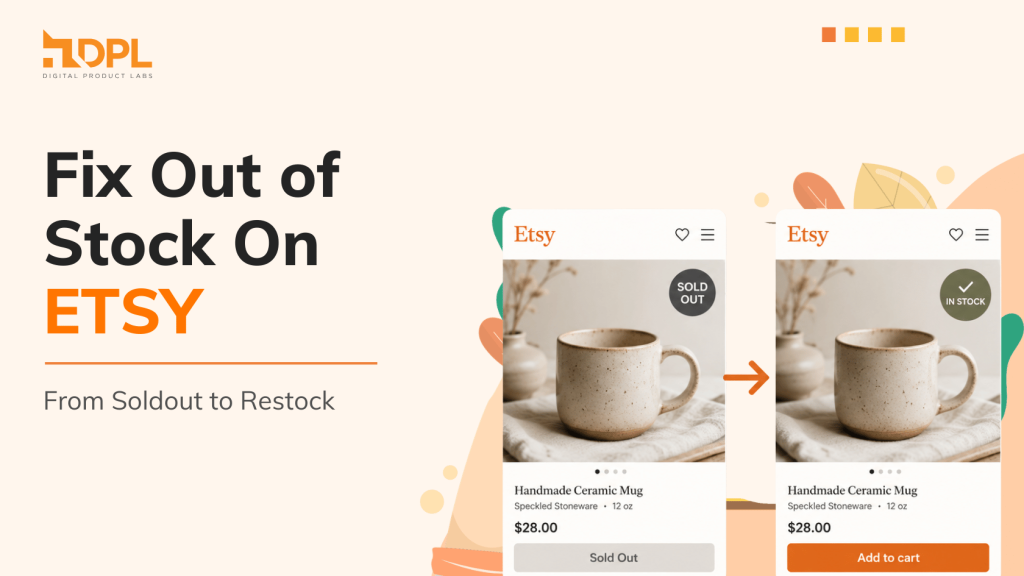
Some sellers treat “out of stock” like a disaster. It does not have to be. Sometimes “temporarily out of stock” is the smart move.

Use “temporarily out of stock” when:

The key is doing it on purpose. If you wait until you are fully out, you will end up with item out of stock orders that force refunds or delays.

A nice way to handle this is to plan “off” time into your listings. If you know you will need two days to restock, pause earlier instead of later. Buyers do not mind waiting when you set expectations. They mind being surprised.

What To Do When You Hit “Item Out Of Stock” Anyway

Even with good rules, mistakes happen. Packages get lost. A piece breaks. A supplier delays a shipment. The goal is to respond quickly and cleanly.

When an item out of stock happens, do this:

Avoid vague statements. “Soon” makes buyers nervous. A date feels safer.

Also, check whether the issue is isolated or repeating. If you often hit out-of-stock items on the same listings, your buffer is too small, your restock point is too late, or your shared stock is not being tracked correctly.

FAQs On Low-Stock Rules For Etsy And Shopify

This often happens because stock changed on one platform but did not update on the other fast enough, or because shared inventory was counted twice across listings.

No. “temporarily out of stock” can protect your quality and your stress levels. It is better to pause on purpose than to sell something you cannot ship.

Treat bundles like they pull from a shared pool and subtract correctly every time. If you sell a set of 3, your shared stock must drop by 3, not by 1.

Be direct and fast. Offer a refund or a replacement option, and give a real timeline only if you can meet it. Buyers usually forgive stock issues when the message is honest.

Use buffers, move your restock point earlier, and pause listings before you hit zero. A weekly low-stock routine helps you spot trouble before it becomes urgent.

A Weekly Low-Stock Routine That Takes Ten Minutes

If you want this to work long-term, you need a small routine. Nothing dramatic. Just consistent.

Once a week:

When peak season comes, this routine becomes your best friend. If you want a seasonal checklist later, the Peak Season Readiness Checklist ties low-stock rules to shipping, demand spikes, and listing hygiene.

Shopify Etsy App

Stop Out-Of-Stock Surprises

If manual updates are starting to feel like a part-time job, it’s time to automate. Etsy Integration - DPL enforces your low stock rules for Etsy and Shopify automatically, keeping inventory aligned across channels so you never face unexpected item out of stock moments again.

Conclusion

Low-stock rules are not about being perfect. They are about staying steady when orders speed up. When you set one inventory “truth,” use buffers, and follow restock and stop-selling points, you deal with fewer surprises. You also spend less time apologizing for items out of stock situations and more time doing the work that actually grows your shop.

Related Post

How to prevent overselling on Etsy when using Shopify - DPL

How To Prevent Overselling On Etsy When Using Shopify

How To Prevent Overselling On Etsy When Using Shopify Managing inventory across Shopify and Etsy often leads to costly overselling when stock updates lag. This multi-channel e-commerce guide breaks down why stock levels drift and offers three practical inventory workflows: the Buffer Method, Single Source of Truth, and automated sync rules to eliminate backorders and […]

Causes Of Etsy Inventory Mismatch - DPL

Etsy Inventory Mismatch: 5 Common Causes & How to Fix Them

Etsy Inventory Management Mismatches: Causes & Solutions Wondering why your stock counts keep drifting? Discover the five most common Etsy inventory mismatch causes, from fighting sources of truth to unmapped variation SKUs, and implement simple, automated operational routines to stop overselling and keep your multi-channel listings accurate. June 4, 2026 9 min read Inventory mismatch […]